Tracing Decision Trees from Athletic Markets to Reel Outcomes in Portable Gaming Ecosystems
Cameron Lange · Jun 10, 2026

Tracing Decision Trees from Athletic Markets to Reel Outcomes in Portable Gaming Ecosystems
Decision trees function as structured algorithms that map multiple input variables to probabilistic outputs, and industry observers note their expanding role across athletic betting markets where they calculate odds on live events while similar frameworks appear in portable gaming platforms that determine reel sequences on slot titles. Data compiled through June 2026 indicates developers have adapted branching logic originally refined in sports wagering systems to manage volatility patterns and payout distributions in mobile slot environments, creating traceable connections between the two sectors.
Athletic Markets and Structured Decision Pathways
Bookmakers operating in regulated athletic markets rely on decision trees to process real-time inputs such as player performance metrics, weather conditions, and historical matchup data before outputting adjusted odds. These models evaluate thousands of conditional branches per second, and regulatory filings from the Nevada Gaming Control Board show that several major operators integrated enhanced tree-based systems during the first half of 2026 to refine in-play wagering accuracy. Observers note that the same modular structure allows quick recalibration when new variables emerge, which explains why athletic platforms achieve rapid response times during major tournaments.
Transfer of Logic Structures to Reel Mechanics
Portable gaming developers have begun incorporating parallel decision-tree architectures to govern reel outcomes, replacing purely random number generator calls with layered conditional checks that reference aggregated player session data and market movement signals. One study released in early 2026 by researchers at the University of Nevada, Las Vegas documented how certain mobile slot titles now embed athletic market volatility indexes into their reel weighting procedures, resulting in adjusted hit frequencies that mirror fluctuations seen in live sports odds. This integration occurs through API connections that feed normalized athletic data streams directly into the game engine's branching logic.
Portable Ecosystems and Cross-Platform Data Flows
Mobile operating environments facilitate these transfers because unified player accounts allow seamless movement between sports betting interfaces and slot libraries within the same application. According to figures released by the Singapore Casino Regulatory Authority in June 2026, integrated platforms recorded a measurable uptick in session crossover activity where users who engaged athletic markets subsequently triggered reel sequences governed by adapted decision trees. The technical implementation involves shared data lakes that store normalized variables, enabling the same conditional nodes to influence both odds compilation and symbol alignment probabilities without requiring separate codebases.
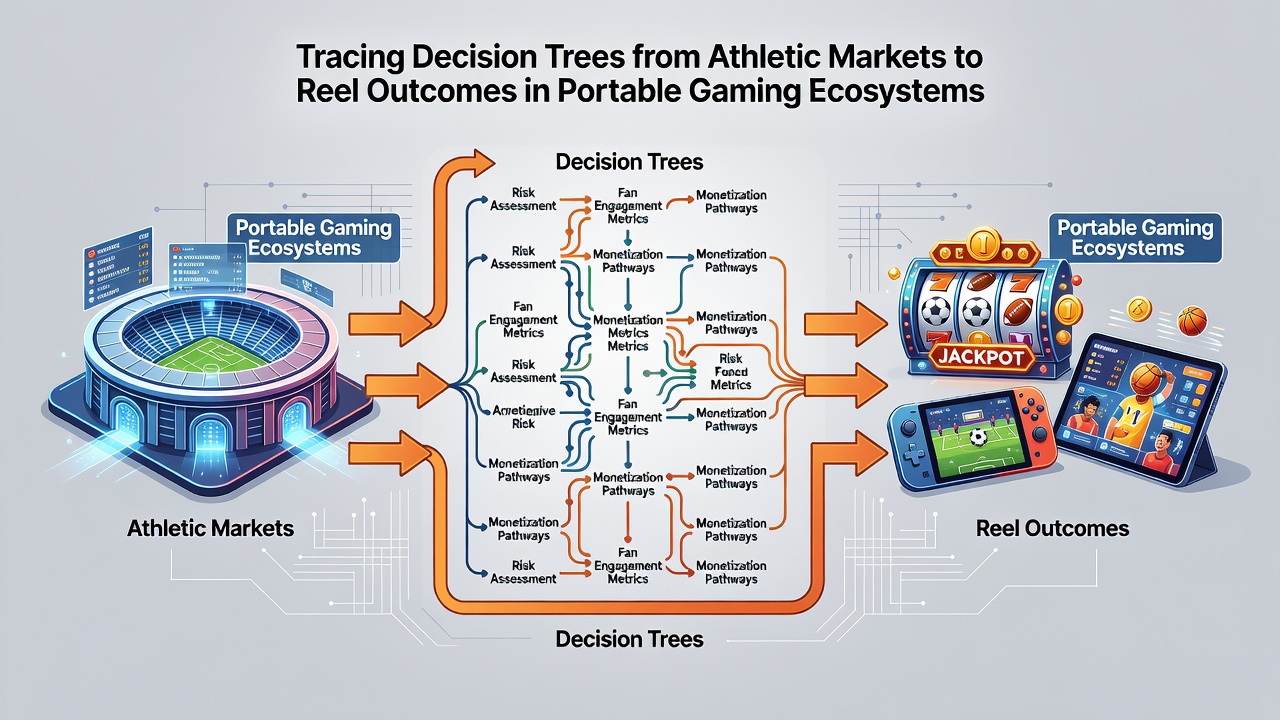
What's interesting is how these systems maintain compliance boundaries while sharing structural elements. Developers isolate athletic market inputs behind regulatory firewalls yet permit derived statistical summaries to influence reel behavior, preserving jurisdictional separation. Those who've examined source code repositories observe that node pruning techniques originally developed for sports risk management now reduce computational load during mobile reel spins, improving battery efficiency on handheld devices.
Implementation Patterns Observed in 2026
Industry reports compiled through the second quarter of 2026 reveal several consistent patterns. Athletic market trees typically contain deeper branches for live event variables, whereas portable slot adaptations truncate depth in favor of faster evaluation cycles suited to short mobile sessions. Data from the Canadian Gaming Association indicates that operators testing hybrid models achieved measurable reductions in server response latency when they reused athletic tree templates for reel outcome generation. These adaptations appear most frequently in titles that incorporate live event tie-ins, where reel symbols or bonus triggers reference ongoing athletic competitions.
Another documented approach involves feedback loops where aggregate reel outcome distributions feed back into athletic market calibration models. This bidirectional flow allows operators to adjust odds compilation parameters based on observed player engagement patterns within the slot ecosystem, creating closed-loop systems that evolve continuously. Research papers presented at the 2026 International Conference on Gambling and Risk Taking highlighted case examples from Southeast Asian operators that implemented such loops without violating local content separation rules.
Conclusion
The migration of decision-tree frameworks from athletic markets into portable reel systems represents a measurable technical convergence documented across multiple regulatory jurisdictions through June 2026. These adaptations rely on modular branching logic that processes normalized data inputs while respecting platform-specific constraints, and available evidence shows continued refinement of these connections in both directions. Future developments will likely depend on how regulatory frameworks accommodate shared algorithmic structures across previously distinct verticals within unified mobile ecosystems.